
Huenyan government confirms involvement in Cauhloc raid
- Huenyan government issues apology, calls operation "rogue mission"
- Cihuātlahtoāni Yauhmi reportedly ordered mission, will abdicate leadership role
- Texōccoatl to succeed Yauhmi as reigning monarch
- Huenyan monarchy expected to cede more authority in aftermath of incident

In a stunning announcement, the political leader of the Huenyan Federation has confirmed that Huenya was involved in the recent raid on the headquarters of Xiomera's Agency for Security and Intelligence.
Vice-Speaker Tiacihitli told the media today that a "rogue mission" was ordered to attempt to free Unification Party leader Cozamalotl, and others in Xiomeran custody, from the infamous headquarters of ASI, the Cauhloc, in downtown Tlālacuetztla. The mission was undertaken on the orders of Great Speaker Yauhmi, the reigning monarch of Huenya and former Xiomeran ruler. "This operation was ordered without the advice, or consent, of the Vice-Speaker's office or that of the Chamber of Executives. It was undertaken solely by Yauhmi's order, in a continuing example of unilateral action without consultation," the Vice-Speaker said. "This manner of governing a nation may be acceptable for a totalitarian state, but is totally incompatible with the governance of a democracy. One person cannot issue such orders alone. As we have repeatedly raised these concerns with the Great Speaker, it has been decided by joint consent that Yauhmi will abdicate her position as Cihuātlahtoāni as of midnight, June 1st, 2021."
The Vice-Speaker went on to add that at that time, Texōccoatl, Yauhmi's son, will take over the role of Great Speaker of the Huenyan Federation. "We further apologize without reservation for the unsanctioned attack on the Cauhloc, and the loss of life there. While we neither condone nor support the totalitarian regime of Empress Calhualyana, it is an essential foundational principle of the Huenyan Federation that we do not initiate conflicts nor act in an aggressive manner towards other states. This rogue mission violated that principle, and for that, we do apologize," Tiacihitli said.
It is unclear whether or not this apology, coupled with Yauhmi's resignation, will temper the anger of the Xiomeran regime at the attack, or deflect international scrutiny as to whether or not Huenya violated the Jinyu Agreement with the Cauhloc raid. Xiomeran officials responded to the news of Yauhmi's abdication with a brief statement: "While Yauhmi should indeed step down for her shameful aggression, it does not change the fact that Huenyan agents attacked our capital. Huenya must be held accountable for this brazen assault, and the Xiomeran Empire will hold them accountable if other nations fail to do so."

In a speech to crowds outside the Xochuaxte Palace in the Huenyan capital Chuaztlapoc after the announcement, Yauhmi sought to reassure people that her abdication was indeed voluntary. She went on to urge the nation, particularly Huenya's dominant ethnic Xiomeran population, to accept the transition of power to her son Texōccoatl. "I hand the throne of Huenya to my son with a happy heart, as this is what I have always wanted for him. I know he will help lead Huenya wisely and well, and with the nation and its people always at the forefront of his decisions," Yauhmi said. The support of Yauhmi for the transition of power is expected to be critical to keep ethnic Xiomeran Huenyans on board, as support among them for Yauhmi is very high.
Yauhmi went on to add that she "will continue to serve the people of Huenya in whatever role and capacity I can." Huenyan officials confirmed that discussions are underway to create a new, as yet untitled, role for Yauhmi similar to a "queen mother" or dowager queen role in other monarchies. Huenyan officials said that the role would most likely involve Yauhmi serving as a sort of goodwill ambassador to other nations, utilizing her connections and goodwill with leaders around the IDU.
The announcement of this new role for Yauhmi, however, also raised anger within the Xiomeran government. "Simply letting Yauhmi walk away from consequences, as she has always done throughout her checkered past, and into a new role is deliberately provocative, from our standpoint," Xiomeran Minister of State Toquauhtli told the media. "The 'punishment' for attacking us shouldn't be a cushy sinecure for Yauhmi - it's a deliberate slap in the face to all Xiomerans."
The Minister also said that the Xiomeran government is "highly skeptical" that other Huenyan leaders, such as Vice-Speaker Tiacihitli, truly knew nothing about the raid before it happened. "Most of the current Huenyan political leaders, including Tiacihitli, are members of Cozamalotl's Unification Party. The idea that they would not have had a role in trying to rescue their leader is ludicrous and another insult to Xiomerans, this time to our intelligence," the Minister said. He added that the raid is "yet more proof that Cozamalotl is in league with the Huenyans and other foreign powers and is a foreign asset seeking to undermine Xiomera, just as charged."
The news of Huenyan involvement in the raid, and the abdication of Yauhmi, could shake international confidence in the emerging Huenyan state. "The Jinyu Agreement was literally just signed a few months ago, and the Huenyans are already credibly accused of violating it. On top of that, the abdication of Yauhmi, who is the most recognizable and respected figure by far in the Huenyan leadership among international leaders, will force foreign leaders to interact with new and untested leaders like Tiacihitli and Texōccoatl. That will not build confidence. It also doesn't help that the raid seems to show that one hand of the Huenyan government doesn't know what the other is doing. All of this paints a picture that makes Huenya seem far less stable than we have been led to believe," Chikelu Okorie, a political analyst for DTNS, said.
Xiomeran government forces occupy Zipacpepe neighborhood of capital
- Move in response to Cauhloc raid, longstanding criminal activity, officials say
- Human rights observers accuse Xiomera of widespread violations in operation

Xiomeran government forces have staged a daylong operation to regain control of a long-restive neighborhood in the Imperial capital Tlālacuetztla.
The Zipacpepe section of the capital, immediately west of downtown Tlālacuetztla, has long been dubbed "the poorest place in Xiomera." It could, in fact, be one of the poorest places in the IDU, period. The neighborhood has long had a reputation for crime and violence, and has been in the grip of criminal gangs for decades, if not longer. It has long been home to the most destitute and desperate people living in the Imperial capital, a place of last resort for those Tlālacuetztla residents who literally had no other place they could afford to go.
The neighborhood has long suffered also from neglect from the central governnment. Successive Xiomeran governments have seen Zipacpepe as a place to wall off the poorest capital residents from the rest of the city, and have made only sporadic attempts to provide services or bring the neighborhood back under control. The neighborhood has also served for many years as a provider of illicit services to the Xiomeran elite in wealthier neighborhoods like Montelin, Aztahuan, Inchahuan and Tlilotl'pac. That "benefit" it provided to wealthier Xiomerans has also kept the Imperial government from seriously cracking down in Zipacpepe.

The recent raid on the Cauhloc appears to have changed that. Xiomeran officials have accused criminal gangs, specifically the Alumban gang, of aiding and providing shelter to those who raided the Cauhloc. The Alumban gang took its name from the section of Zipacpepe it controlled, around the main avenue of the neighborhood. It was just one of dozens of gangs controlling the neighborhood. None of those gangs have been spared a harsh Imperial response following the Cauhloc raid.
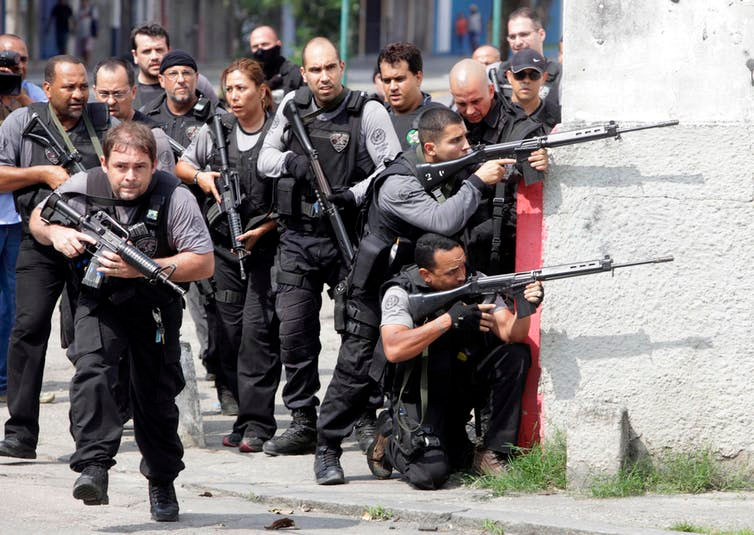
In a coordinated raid between local police, Imperial Police, ASI and the Imperial Army, Imperial forces have regained control of the neighborhood in what Xiomeran officials termed "a successful and beneficial operation for the neighborhood and the capital as a whole."
"We have finally, once and for all, broken the power of the criminal gangs who have controlled Zipacpepe, and liberated its people from their predation and violence," Justice Minister Cuicanan told the media. "The people of Zipacpepe will now be able to walk the streets in peace and safety. Their homes will no longer be violated by criminal scum seeking to rob them. They will no longer be subject to shakedowns for money from these criminals. The people of Zipacpepe can now breathe freely and rejoice - safety and security have returned to their streets, and prosperity will soon follow. This is the commitment of the Empress to the people of Zipacpepe, and all the Empire."

While Xiomeran officials described the operation as successful and beneficial, human rights observers have condemned the Xiomeran operation as brutal and heavy-handed. "Xiomera's government brought not just the security forces, but the military, into a civilian neighborhood and used totally unrestrained force, making little to no distinction between gang members and neighborhood residents who were in the way of their operation." Makoro Waaka, who leads the Milintica-based International Center for Human Rights and Justice, told DTNS. "We have received reports of dozens, possibly hundreds, of casualties. We have received reports of entire city blocks being razed. This operation was meant not to liberate Zipacpepe, but to punish it for the role one gang there played in the Cauhloc raid. This was collective punishment of an entire neighborhood because Imperial officials were mad about the Cauhloc raid. The international community needs to sanction Xiomera for this outrage," Waaka said.
Waaka was also critical of the Xiomeran justification for the raid as "restoring peace and security to Zipacpepe."
"If the Imperial government cared about the people in Zipacpepe, why didn't they try to do something about the gangs decades ago? The Xiomeran government didn't give a damn about the people suffering in Zipacpepe as long as the gangs kept it in their neighborhood, shoved off in a corner where the rest of Tlālacuetztla didn't have to see it. It wasn't until the gangs attacked the government that the government suddenly saw a need to act," Waaka said.
Xiomeran officials have dismissed such criticisms, with the Justice Minister accusing foreign observers of "greatly exaggering the numbers" of injured or dead during the operation and insisting that only gang members who resisted with force were casualties. Cuicanan accused groups like ICHRJ of "deliberately exaggerating the operation in order to slander the Xiomeran Empire."
Foreign and Xiomeran media, with the exception of state media outlet XIN, were not allowed within a mile of Zipacpepe during the operation due to a security cordon set up by Xiomeran officials. As of this report, no foreign media have still been allowed into the neighborhood, and foreign observers are also being blocked from access to confirm independent claims about the operation.


Comments